Showing posts with label Goodreads. Show all posts

Tuesday, 30 August 2016

The Time in Between ~ Maria Duenas

The Time in BetweenThe Time in Between by María Dueñas
My rating: 2 of 5 stars

I have discovered that I primarily give 3 star ratings when I review novels. I blame Goodreads for not having a 1/2 star rating system, in which case I would give The Time in Between 2 1/2 stars. I am forced to drop this down to 2 stars though.

The blurb on the back of the book is promising enough. Sira Quiroga is a young seamstress growing up in Madrid. Spain is facing a civil war, the citizens are beginning to suffer. She follows a lover to Morocco where she is abandoned and left with debt incurred looming over her head. Slowly she pulls herself out of the gutter and lifts herself up into a more promising position. In the description, as WWII commences and Spain finds itself caught between the Allies and the Third Reich, Sira begins a harrowing stint as a spy.

First off, the novel is 600+ pages and 69 chapters long. Divided into three parts, the novel felt like it was never going to end. Sira doesn't even begin her delving into the spy world until chapter 36. 36. Imagine, 35 chapters of her backstory that is interminably dull.

The character of Sira herself is as interesting as a shoe or doorknob. She survives through many horrible situations, but yet I found myself barely able to keep myself interested in her saga. There was minimal dialogue, mostly just long paragraphs about what Sira was thinking, which incidentally, was dull as dishwater. For someone who supposedly triumphed even though odds were against her, it was awfully tepid.

Her supposed romance with a character isn't even delved into or truly fleshed out. She claims to have missed this person dreadfully during their separation, at which I went, "Eh, did she even truly and deeply care about him?" As a protagonist, Sira's character is shockingly lacking in being fleshed out or in any way dimensional.

Part three (from chapter 36 on) was much more interesting than the beginning stages of the novel. I did manage to read through that section at a much quicker pace. That being said, was it worth struggling through an huge portion of the novel in order to enjoy the last little bit of it?

There are other much more compelling novels about Spain in the civil war and their involvement in WWII. If you want to read a novel about spies, check into anything written by Ken Follett.

Pass by this novel though, unless you are into a long boring read with little pay off.

2/5 stars.

View all my reviews

Thursday, 25 August 2016

The Shadow of the Wind ~ Carlos Ruiz Zafon

The Shadow of the Wind (The Cemetery of Forgotten Books,  #1)The Shadow of the Wind by Carlos Ruiz Zafón
My rating: 5 of 5 stars

I first read this novel a couple years ago on the emphatic suggestion of a worker at the local Chapters. I gave it 4/5 stars initially. I managed to snag a used copy of another Carlos Ruiz Zafón novel and decided I would re-read The Shadow of the Wind before starting this next novel.

Upon completion, I have decided to bump the rating up to 5/5, because I finished it with no complaint and I would not have changed anything about the novel. Although I had read it once, I couldn't put it down...again.

The novel is a story within a story. Daniel Sempere, our young protagonist, finds a novel called "The Shadow of the Wind" by a Julian Carax within a book cemetery, deep in the heart of war torn Barcelona. I have read very few books on the civil war within the Spanish borders and the ensuing chaos, so it was refreshing to read about a period of history in a country other than the usual England/France/etc.

It becomes clear to Daniel that there is something strange about the author and his novels. He discovers that someone has been systematically finding and destroying all of Carax' novels with fire.

The story is complex but easy to read. It would be impossible for me to explain the novel in a book review; I would not do it justice. Suffice to say, the novel is well written. The characters grasp you and the dialogue is not stilted or boring. Even though the story is fantastical, it never struck me as reaching. There are many twists and turns that will leave you guessing and wondering, right up until the last chapter.

My favourite quote in the book was as follows:

Bea says that the art of reading is slowly dying, that it's an intimate ritual, that a book is a mirror that offers us only what we already carry inside of us, that when we read, we do it with all our heart and mind, and great readers are becoming more scarce by the day.


Honestly, from that quote itself, doesn't the book sound magical?

5/5 for one of my favourite books. I cannot wait to read his next novel!

View all my reviews

Friday, 5 August 2016

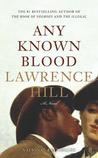
Any Known Blood ~ Lawrence Hill

Any Known BloodAny Known Blood by Lawrence Hill

My rating: 4 of 5 stars


After reading The Book of Negroes and more recently The Illegal, I decided to give Lawrence Hill's older novel Any Known Blood a try.

Truly, Hill does not disappoint. I found Book of Negroes engrossing and just the right amount of uncomfortable to read. The Illegal was a completely different pace (a slow burn) but I also enjoyed it. Once again, Any Known Blood keeps the bar high.

The novel's protagonist Langston Cane the Fifth decides he is not tethered in this world because he knows nothing of his family's background. He travels from Oakville, ON to Baltimore, Maryland in an effort to dig into his family's past. He leaves behind a father who he feels is constantly disappointed in him.

Jumping through all the Langston Canes from 1 to 5, there isn't any predictability to the book in terms of form. Hill does not opt to write about the Canes down the family tree from senior to junior, but rather dances from one character to the next. We slowly discover all the choices that the Cane's have made that have bound them together and created their future.

To be honest, the novel isn't full a huge climax. There isn't one big AHA moment that is revealed. Rather, we watched as Langston Cane V slowly finds his way in the world as he unveils the secrets his family has hidden over time.

Hill writes about many deep rooted issues that African-Americans are facing today in a way that includes white people in the dialogue but in a non-accusatory manner. I assume this is partially Hill speaking from his own experience of being a mixed race. Either way, it was enlightening to read and understand why or how people feel a certain way.

4/5 for more excellent work from Hill and holding my breath for more.

(Incidentally, he lives in the same city I do and I once saw him shopping at our local grocery store. Must...not...stalk him.)


View all my reviews

Sunday, 22 May 2016

Career of Evil ~ Robert Galbraith

Career of EvilCareer of Evil by Robert Galbraith
My rating: 3 of 5 stars

Career of Evil is the third book in the Cormoran Strike trilogy by Robert Galbraith aka J.K. Rawling...and sadly also my least favourite. I wanted to love it, I wanted to give it four or even FIVE stars, but on finishing it I was left dissatisfied.

First off, there will be mild general spoilers in this review, so please stop reading NOW if you haven't read this novel and plan to. STOP NOW.

You've been warned.

Last warning.

ONWARD.

In the first novel of the series The Cuckoo's Calling, we are introduced to Strike and Robin, his loyal secretary cum partner. Strike runs a detective agency, having a background in the SIB. Obviously the novel is written in a manner where we know Strike has undisclosed issues and secrets that we will probably learn as the series goes on.

The second novel The Silkworm seems to focus a bit more on the actual case rather than the intricacies of the characters and the relationships they are in. There is an unspoken interest between Strike and Robin, but it isn't acted on at all and rarely referred too. Galbraith does a good job keeping their relationship on a quiet boil. Clearly it's going to be a slow burn.

Finally, Career of Evil. I was so excited to read this book. Strike and Robin are both likeable characters. The language and quality of writing is good. Galbraith-Rawling certainly knows how to write a gripping detective story. The Silkworm has truly creepy and strange parts to it and I was hoping Career of Evil would be the same.

The premise is: a package is mailed to Strike's office addressed to Robin. It's a dismembered leg. This sends Strike down a path of trying to find who the psychopath was that sent this leg. He is convinced it is one of three bad apples from his past. Meanwhile, interspersed with Strike and Robin's narrative is the narrative of the killer that actually *is* quite creepy.

We learn A LOT about Strike's history. We learn A LOT about Robin's history. It seems as though all the character's secrets are spilled out in this book. Robin and Strike's connection go. More time in spent on the tiny possibility of a relationship. The thought lingers in the back of Strike's mind. Sizzle sizzle, the slow burn.

UNFORTUNATELY, even though it was admittedly interesting to learn more about the background of these two characters and what motivated them, at the end of the book I was left disappointed with regards to the mystery.

You see, I kept thinking in my head, 'No, she wouldn't use on of Strike's suspects...that would be too predictable and an easy route...maybe it will be someone related to the suspects or a complete snake in the grass'.

NO. There is no bloody snake in the grass!!! It simply ends up being who Strike suspected and honestly, the characteristics and mannerisms of the narrative of the killer did not in my head jive with who the killer turned out to be. I thought the narrative and the description of the antagonist was that of a much much younger person.

I did like this book, I was simply let down with the lack of effort that seemed to be put in to creating a truly shocking ending. Galbraith could learn a lot from Agatha Christie and her unparalleled writing.

3/5 and hopefully the next in the series will have a little more punch to it.

What do you think?

View all my reviews

Friday, 15 April 2016

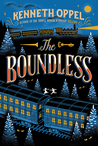
The Boundless ~ Kenneth Oppel

The BoundlessThe Boundless by Kenneth Oppel
My rating: 4 of 5 stars

The Boundless by Kenneth Oppel was a delightful read.

I've been attempting to be more selective with my book reads due to have much less free time--babies cause that strange phenomenon of loss of leisure time.

Regardless, I grabbed this book during a book outlet sale, drawn to it by it's artistic cover...and my instincts proved correct.

If I was going to pick a book that I could compare The Boundless to, it would be The Night Circus by Erin Morgenstern--which I also greatly enjoyed.

After finishing the book (in one evening, no less), I went onto Goodreads to get an idea of what other readers thought of it. I was quite surprised to read reviews criticizing how "slow" and "boring" the beginning of this novel was. Someone even commented that it didn't pick up speed at all.

Clearly none of these reviewers have ever read any Russian literature. They would still be on the first page of War and Peace, bogged down in the multiple names of Constantin Levin.

To be clear--I did not find this novel boring or slow *at all*. It was delightful for a few reasons.

I loved that it was set in Canada. I find Canadian literature to be so boring sometimes. This was an interesting combination of fantasy and historical fiction.

The premise of the novel is set on a massive train called, you got it, the Boundless. The protagonist is a teenage boy called Will who is got up in a plot to....well, I can't go into detail because it would spoil the novel for any possible readers.

With the speed and ease that I was read it, I would think that it should be classified as a teen or young adult novel.

Definitely give this novel a chance if you're interested in a simple read that has small elements of fantasy.

4/5 stars and I'll have to check out other book by Oppel.

EDIT: Just checked the novel is in the category of children's literature. Very appropriate.

View all my reviews

Sunday, 4 October 2015

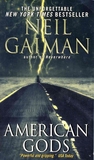
American Gods ~ Neil Gaiman

American GodsAmerican Gods by Neil Gaiman
My rating: 2 of 5 stars

From Gaiman's repertoire to date, I have read Stardust, Neverwhere, and The Ocean at the End of the Lane. I very much enjoyed all three and had high hopes for American Gods as many people have recommended this book to me and it has decent reviews.

Unfortunately, I found that American Gods was simply so different from his other works in tone and nuance, I could not enjoy it. In the other works I read I enjoyed the almost childlike fantasy that emanated from his stories. Stardust, after all, has been made in a children's movie. Clearly Gaiman had written American Gods for a much different audience, but as I was not expecting this I did not find it an enjoyable read.

It starts out promisingly enough with the story of Shadow, a convicted thief, who finds himself released from serving his time in jail. With his release, a series of terrible events occur including the untimely death of his adulterous wife--double whammy. In a way, he is driven into the arms of "Wednesday", a mysterious man who we later discover is actually a Nordic god.

The concept of this novel isn't terrible. There are a group of gods who have become irrelevant to society because they are no longer worshipped--Odin, Easter, etc. Most of the gods seem to come from a Gaelic or Middle Eastern descent. Either way, the idea is interesting, but unfortunately spirals into a giant confusing plot.

Not only are there this older gods, there are new god (Media, Technology) who are convinced there is no room in America for both older gods and them. They decide they need to start killing off the older gods. Shadow is in essence, Wednesday's Yes-Man, chauffeur, etc.

The two characters who are most interesting in this novel are Wednesday and Shadow, but everything else is just ridiculous frippery. Gaiman adds extra back stories of the birth of gods to contribute to their explanation, but unfortunately it just causes more confusion and makes the novel unbearably long. I was much more interested in the narrative of Shadow and felt irritated by this useless interruptions on the birth stories of random gods.

Ultimately, it was just a much different book than any I had read by Gaiman, so I shouldn't fault it for that. However, I do fault his editor for not slashing more of the fluffy wasteful extras from this book that bloated it into a 588 page paperback.

Whether I continue reading Gaiman...I'm not sure. If this was the first Gaiman book I had read, I probably wouldn't.

2/5


View all my reviews

Friday, 17 July 2015

The Perfume Garden ~ Kate Lord Brown

The Perfume Garden: A NovelThe Perfume Garden: A Novel by Kate Lord Brown
My rating: 2 of 5 stars

I was tricked into reading this book by it's enticing cover and deceiving description. It promised to be a riveting read about survival, life and death in Spain during the revolution. Not having read many novels about the Spanish revolution (other than The Shadow of the Wind which was exemplary), I was excited to enjoy some historical fiction that hopefully had some facts sprinkled in.

Unfortunately, the dialogue was childish and the characters undeveloped. The protagonist Emma was annoying and boring. It almost seemed as those the author read a Wikipedia article about the Spanish revolution and then worked those facts into random parts of the dialogue. There was no seamless weaving of fact and fiction to be had.

Some of the cringe worthy writing included:

A woman with a dark veil turned and pursed her lips "Shh". Emma's reverie broke, and she met his gave for the first time. She felt like she had come to the end of a long journey.


and


"(...)Don't bother dressing on our account, Luca," he said, raising his eyebrows at Emma. "Not bad for an old man, eh?"
"Who are you calling an old man?" Luca laughed.
"What do you think, Emma?" Guillermo leaned toward her.
Luca glanced back at her as he walked away. "Are you two checking out my ass?" He smiled as he stepped into the cool shadows of the apartment.


Much of the dialogue did not match the tone of the novel, or rather, the tone that the writer was attempting to convey. Even the descriptions of the atrocities that the Republicans suffered through post-war were boring and bland, characters reciting terrible things that had happened. It seemed as though true emotions were never plumbed or even slightly conveyed in any manner.

Emma ended up seeming vapid and boring. Her anger over being cheated on felt fake and insincere. All of her emotions seemed to be a bit robotic and there was no encompassing sensation of love or anger or hatred that seemed to have any PASSION.

If this novel hadn't been about the Spanish war and the consequences that followed...If it had been a simple romance without any promising back story, it would perhaps have been more palatable. Instead, I was left feel cheated by a novel that seemed to lack any genuine emotion.


2/5 and don't bother.

View all my reviews

Friday, 12 September 2014

The Piano Tuner ~ Daniel Mason

The Piano TunerThe Piano Tuner by Daniel Mason
My rating: 1 of 5 stars

If I had to describe this novel in one sentence:

A swift sharp drop kick to the genital area.

This is a story of a shy, gentle, educated piano tuner who specializes in tuning Erard pianos. Set in the 1800s, the British empire is struggling to maintain control of their rule in Asia and Edgar Drake is summoned by the war office on a mission…to go to the far east, past Mandalay, to a remote village where an eccentric Englishman Dr. Anthony Carroll maintains the local peace by playing his Erard piano.

The book has some wonderful descriptions of Drake’s journey but it wears thin quickly. I found some of the details of the villages and the Burmese culture interesting, but I also had to read very intentionally in order to avoid dialogue that the author worked into the paragraphs without using quotations or different paragraphs.

Dialogue compressed into one paragraph throughout the novel is very frustrating to read and I found it rather pointless. Why have actual formatted dialogue at certain times and then have random giant amount of conversation squished down into one paragraph?

Then there’s the…entire plot. Drake leaves his wife of many years to travel east because of a hole he feels inside, an emptiness he wants filled. As the novel continues, it never truly addresses what the hole is and ultimately whether it is ever filled. We get the sense that he is falling in love with a young Burmese girl who is somewhat Carroll’s partner, although we are never enlightened as to what exactly those two are to each other.
Much of the book focuses on the politics and military movements of the time, which is pretty dry and boring. I’ve read GOOD historical fiction novels that include actual history in them without being boring. (Ken Follett is a good example of such writing.) This novel is not one of those books, unfortunately.

In the end,

SPOILERS BELOW

Edgar discovers the English gentleman he has been spending time with may or may not be a spy and the woman is his accomplice. He runs back to Mae Lwin (remote village) to find them and hears a noise, falls to the ground and feels a warmth spreading out beneath.
Well…

Did he pee himself? Was he shot? Was the warmth his life blood?
Did he learn anything? Was the hole filled? Why did he leave his “beloved” wife and almost cheat on her with a random somewhat partner or a military man who tries his hand at botany?

The whole novel is ridiculous. The premise is great, the story seemed intriguing, but it fell flat in so many way. Many of the reviews I have read on Goodreads talk about how poetic and moving this novel was. I do not see that AT ALL. This book was tripe and fluff. It felt pretentious and clunky, the characters not particularly likeable or enthralling, and the description bloated and confusing.

I do not recommend this book to anyone. They will end up being a disappointed as I was.

1/5 stars.


View all my reviews

Thursday, 26 June 2014

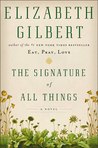
The Signature of All Things ~ Elizabeth Gilbert

The Signature of All ThingsThe Signature of All Things by Elizabeth Gilbert
My rating: 3 of 5 stars

I have never read a book written by Elizabeth Gilbert before so the reviews I have read comparing this book to, say, Eat, Pray, Love are meaningless to me. In this way, I feel I had a very open mind to her works with being unable to compare The Signature of All Things to other novels she has written.

This is a story of a girl, then woman named Alma who finds her way in the world. It begins with the back story of Alma's father Henry Whittaker and his path as he travels from poverty to wealth. To me, this was the most interesting portion of the book...which isn't good considering that it is only the beginning chapter. We learn about Alma's parents and how they have arrived at their current situation in life when Alma is born. The story of her parents is integral to the novel as it explains how Alma is brought up.

She is taught multiple languages at a young age. Her parents believe all children should be thoroughly educated so she is encouraged to explore and ask questions. She rides her pony at five years of age into the forest to forage for botany samples. It is intriguing to read and compare the learning differences from the 1800s to how our children in this day and age are educated. (Obviously her education was atypical of that time period for a female.)

When she is nine her family adopts a little girl named Prudence and she struggles to relate to the girl as a true sibling. There is always a wall between them that Alma cannot break through. This becomes a repeated theme throughout the novel, with Alma trying to understand Prudence her entire life. My hope was that there would be something dark or scandalous involved with Prudence, but in the end *SPOILERS* it is boringly revealed that Prudence is as altruistic of character and as sacrificial as she seems.

In one sentence the book fast-forwards twenty something years and Alma is in her forties. Nothing in between is truly elaborated on. We learn she is still living on the family plantation and is still working on botany studies. But aha! A charming man comes to visit the plantation and she finds herself falling in love with him at the grim spinster age of forty-eight.

(At this point we have already been subjected to awkward descriptions of Alma's personal sexual awakening, which is expressed later in her sexual interest in this visitor, an Ambrose Pike.)

Alma develops feelings for him, he is interested in heavenly things believing he once communicated with God and the plants etc, she believes they are of like mind, they marry, they never have sex, she is devastated, she sends him away.

From there on it's just disappointment after disappointment. Imagine reading that her biggest desire was to "take a man's member in her mouth". This from an educated well-read woman who is apparently satisfied with her life? It's ridiculous and so incongruous in the setting of the novel.

Finally, Ambrose Pike, who she weeps over (after discovering his homosexual proclivities) is nowhere near worthy of tears or expenses or complete life changes (travelling to Tahiti to find his lover). All the characters seem boring. The most intriguing person, Henry Whittaker, is not nearly elaborated on enough.

I feel I was tricked by this novel. It seems to be an interesting read on a woman who discover secrets of life, but in the end she just wanted to have oral sex. Even more insulting, she didn't seem interested in receiving any in return.

My rating is 2.5/5, but I bumped it up to 3 because I felt that the descriptions were good and I did find it to be a somewhat educational read. Will I pursue other books by Elizabeth Gilbert? Probably not, unless someone promises me that life's culmination is not found in a blow job.

View all my reviews

Monday, 10 February 2014

The Hour I First Believed ~ Wally Lamb

The Hour I First BelievedThe Hour I First Believed by Wally Lamb
My rating: 2 of 5 stars

I thank my good sense for only paying $4 for this book from Value Village. Thank heavens for discounted used books.

I had high expectations for The Hour I First Believed simply because I had heard so much about the author Wally Lamb. Many people had recommended She's Come Undone (probably won't read it now) to me and I mistakenly thought that he was a solid writer.

No, no, no. This is one the most depressing books I have read, thus added to my "Books to Never Read Again" shelf.

The premise: the main character Caelum Quirk works as a teacher at Columbine High School along with his wife Maureen who is the school nurse. Simple enough. One of his family members dies and he travels alone to be present at the funeral. Meanwhile, Maureen goes in to work on the fateful day that Dylan Klebold and Eric Harris rampage through the school killing several teenagers, leaving many injured and suffering.

Maureen survives through the shooting (barely) and begins an inevitable and slow spiral downward. Caelum finds himself at his wit's end and decides to move to the family farm in Connecticut to begin over.

Clearly any reasonable person could have told him that you bring all your pain and suffering with you, the burden of memories that you are consigned to carry. Maureen never fully recovers and ends abusing narcotics and eventually goes to jail.

Meanwhile Caelum rents out some rooms in the house for extra money and begins looking into his family history, which turns out to be surprising and much more than he anticipated.

Here's the biggest problem: there was too much going on. This is a MASSIVE novel at 768 pages and the entire second half focuses on his family history, which let's get real, no one cares about! The main story of Caelum suffers from lack of attention. No one wants to read the narrator's POV at the young age of 8, least of all me who suffers from a severe lack of patience when it comes to poorly edited books.

In the end there is no redemption. Lamb throws in the statement "and this was the hour I first believed" in the last chapter, but the I was left asking, "believed what???". The book fails to pull itself together and leaves the reader A) wondering what they just read and B) contemplating the hours they just lost of their life for a book that never came through.

Pass.

2/5 stars.

View all my reviews

Thursday, 2 January 2014

A Year of Reading...Done!

In January 2013 I entered the Goodreads reading challenge setting myself at 100 books to be read in 2013.

I can very proudly say, I met my challenge!!! 


I read 101 books in the year.  I will admit that a few of them were re-reads, but I still count them towards the goal!

Toward the end of the year I suffered through some very frantic reading.  I had let myself fall behind and wasn't sure I would make the goal.  However, after a couple "light" reads, I found myself back on track.

Below is the list of books I read in 2013 and I have arranged them but my star ratings.


ONE STAR (books I really hated)


Message In A Bottle - Nicholas Sparks - predictable romantic tragedy
Disgrace - J.M. Coetzee - depressing & dark
The Pact - Jodi Picouolt - everything wrong with Generation X
Mrs. Dalloway - Virginia Woolf - self indulgent tripe
Gone Girl - Gillian Flynn - sadistic, boring, predictable
The Things We Cherished - Pam Jenoff - disappointing 
Midnight in Austenland - Shannon Hale - a disgrace to all things Austen
The Choice - Robert Whitlow - proving again how banal Christian lit can be
Me Before You - Jojo Moyes - a quad intent on euthanasia? how thrilling.
The Dinner - Herman Koch - pretentious useless crap


TWO STARS (books I didn't mind/tolerated)


[series]
Mud City - Deborah Ellis - the third book of a trilogy that betrayed me
Heaven's Wager - Ted Dekker - Dekker takes a wrong turn with a horrible attempt to write like Frank Peretti
Death of a Kingfisher - M.C. Beaton - Hamish needs to make some serious life changes

[fiction]
On the Island - Tracey Garvis-Graves - twisted weird romance between student & teacher, vomit
Glazed Murder - Jessica Beck - painfull dull, boring characters
A Soft Place to Land - Susan White - can barely remember it. exactly.
Death Comes to Pemberley - P.D. James - leave Austen alone
The Pilot's Wife - Anita Shreve - a hot mess of a book. minus the hot.
The Hour I First Believed - Wally Lamb - deserves a one just for the sheer size and rambling. I felt charitable.
Rescue - Anita Shreve - so much predictability and boringness. ugh.
After You - Julie Buxbaum - someone dies, family is sad, time heals. blah blah blah.
Love Anthony - Lisa Genova - disappointing compared to author's previous novels
Love the One You're With - Emily Griffin - staple PMS novel, not good for much else
The Distant Hours - Kate Morton - gothic romantic tragedy that left me dying inside
Next to Love - Ellen Feldman - another silly insipid romance

[non-fiction]
Beyond Belief - Jenna Miscavige Hill - a look into Scientology that leaves a lot of questions


THREE STARS (books I liked)


[series]
The Breadwinner - Deborah Ellis - 1st book of trilogy, solid start
Parvana's Journey - Deborah Ellis - 2nd book of trilogy, great continuation

Forever in Blue: 4th Summer of the Sisterhood
 - Ann Brashares - the usual goodness
Sisterhood Everlasting - Ann Brashares - disappointing end to a great series

The Passing Bells - Phillip Rock - 1st book, meet characters
Circles of Time - Phillip Rock - 2nd book, follow characters through trials and tribulations
The Future Arrived - Phillip Rock - 3rd book, decent ending, anti-climatic

[fiction]
The Secret Keeper - Kate Morton - typical Kate Morton with creepy romance
The Secret Life of Bees - Sue Monk Kidd - loved this book! would have given it more stars if it had moved a bit faster
The Outcast - Sadie Jones - gripping read but also dissatisfying
The Winter Palace - Eva Stachniak - long long, dragging, but enlightening
The Kitchen House - Kathleen Grissom - I enjoyed this quite a bit but didn't find the characters well fleshed out.
What Alice Forgot - Liana Moriarty - I should have given this book a two.  It was okay, minus the ending.
The Rosie Project - Graeme Simsion - not as compelling and hilarious as I was assured, but still good
My Sister's Keeper - Jodie Picoult - the only Picoult I can slightly stand
The Fault in our Stars - John Green - again, over-hyped, but decent for what it was--a story of doomed teenagers
Sycamore Row - John Grisham - not Grisham's strongest, but not his worst. acceptable.  
The Midwife of Venice - Roberta Rich - I liked this book quite a bit, but the narrative was lacking and the ending was TOO SOON.  
A Kingdom Far and Clear - Mark Helprin - kids book, creepy like Grimms Tales. I enjoyed.
The Other Typist - Suzanne Rindell - mind games galore in this novel.  bit of a frustrating read
State of Wonder - Ann Patchett - could have given this 4 star rating had it not been for annoying characters
The Summer We Read Gatsby - Danielle Ganek - this probably deserves a 2 star. usual easy summer read. nothing memorable.
Jackdaws - Ken Follett - solid Follett. enjoyed this while camping. 
Alice Bliss - Laura Harrington - don't remember what this was about. enough said.
22 Britannia Road - Amanda Hodgkinson - okay. too much going on IMHO.
The Great Gatsby - F. Scott Fitzgerald - no review needed.
North and South - Elizabeth Gaskell - dragged on a bit. mini-series much more enjoyable thanks to Richard Armitage
The Shoemaker's Wife - Adriana Trigiani - epic sweeping novel with very little pay off. 
The Ocean at the End of the Lane - Neil Gaiman - deserves a 4 but creeped me out a bit too much
Joyland - Stephen King - lacking the creeptastic King factor, sadly.
How To Tell if Your Cat is Plotting to Kill You - Matthew Inman - I laughed
The English Patient - Michael Ondaatje - very poetic, very confusing, lots of teeth gnashing

[non-fiction]
The Nuremberg Trials - Paul Roland - enlightening
Growing Up Amish: A Memoir - Ira Wagler - totally depressing
My Story - Elizabeth Smart - triumph! go Elizabeth, go!
Stolen Innocence - Elissa Wall - sad sad sad.  sad. 


FOUR STARS (book I really liked)

[series]
The Sweetness at the Bottom of the Pie - Alan Bradley
The Weed that Strings the Hangman's Bag - Alan Bradley
A Red Herring Without Mustard - Alan Bradley
I Am Half Sick of Shadows - Alan Bradley
Speaking from Among the Bones - Alan Bradley
I loved all these books.  A series well worth the read.


A Game of Thrones - George Martin - the book that started the GOT craze. I'm still sad about Ned Stark.
A Clash of Kings - George Martin - easily as good as the first book in the series, ACOK brings it all back, although some complain that this book has too much military strategy clogging it up
A Storm of Swords - George Martin - better than two and four, although slow at the ending
A Feast for Crows - George Martin - seriously, the worst book of the series. thank God Martin gets it together in the next novel.
A Dance with Dragons - George Martin - after a horrible fourth book, ADWD brings back the typical Martin craziness. 

The Sisterhood of the Traveling Pants - Ann Brashares - the first novel that started it all, this is the best one of the entire series
The Second Summer of the Sisterhood - Ann Brashares - ditto, as above
Girls in Pants: The Third Summer of the Sisterhood - Ann Brashares - typical sisterhood novel

[fiction]
Cutting for Stone - Abraham Verghese - rich description, grand story, historical fiction, eye popping, very much enjoyed this story
Major Pettigrew's Last Stand - Helen Simonson - easy quick sweet read
Why Grizzly Bears Should Wear Underpants - The Oatmeal - comic relief. I guffawed out loud while reading.
The Good Dream - Donna VanLiere - I loved this book.  It's about tied for my favourite for 2013 reads.  A story of love and redemption.
Jericho Season 3 - Dan Shotz - A bit of cheat read, but a great graphic novel continuance on the cancelled show
Shelter Me - Juliette Fay - a young mother learning how to deal with immense loss. I love this book, probably more than it deserves.
Hotel on the Corner of Bitter and Sweet - Jamie Ford - very enjoyable. the main character was so endearing.
The Scarlet Pimpernel - Emmuska Orczy - A classic must read
Banker - Dick Francis - I love all of Francis's books and wish they were movies or tv shows. This one is particularly tragic.
N or M? - Agatha Christie - the queen of mystery, a quick read, like meeting an old friend for a chat.
Evil Under the Sun - Agatha Christie - she's back with a classic Poirot. I enjoyed this re-read.
Neverwhere - Neil Gaiman - a master at his craft, I'm so glad I discovered Gaiman this year

Mrs. Mike - Benedict Freedman - Perfect for Canadians, a romance growing in the darkness of the truth north
The Shadow of the Wind - Carlos Ruiz Zafon - gothic, dark, creepy, historic fiction...absolute must read!
The Soldier's Wife - Margaret Leroy - probably too highly rated, but I loved the descriptions in this novel
The Lost Wife - Alyson Richman - my favourite novel of 2013, I believe. so wonderful and heart-breaking.
Those Who Save Us - Jenna Blum - I read many historical fiction novels this year about WWII. this one was a good one.
The Book Thief - Marcus Zusak - As with above, historical fiction about WWII but written in the strangest format I have ever seen...highly recommend. Plunge through the confusion.
Rebecca - Daphne du Maurier - this novel puts Kate Morton's work in her place. the start of gothic romance, this is a creepy novel in which we never learn the main character's name!

[non-fiction]
Escape from Camp 14 - Blaine Harden - shocking memoir of life in the work camps of North Korea
A House in the Sky - Amanda Lindhout - best non-fiction book I read this year. shocking memoir of a Canadian woman taken by Somalians and held for 460 days.  gut wrenching. 


FIVE STARS (books I LOVED)

Goodnight Mister Tom - Michelle Magorian - a novel for kids, a must read, disturbing elements but sweet at the end
Fall of Giants - Ken Follett - best historical fiction novel I have ever read. highly recommend.
Winter of the World - Ken Follett - a follow up to Fall of Giants, this novel was also amazing and a very gripping read. I learned so much from both of his books.
A Dog's Purpose - W. Bruce Cameron - the sweetest book I have read about a dog. I loved it.  I can't say more for fear of spoiling it, but do read it if you have a dog or love dogs. 


And there you have it!  All of my book in a list. I realize it's probably very overwhelming to read the entire list, but I hope you at least peruse the four or five star categories as many of those novels are must reads!  

This year I won't be setting such a high challenge as I will be busy...GETTING MARRIED!

What are your New Year's reading challenges?


Wednesday, 27 November 2013

The Good Dream ~ Donna VanLiere

The Good DreamThe Good Dream by Donna VanLiere
My rating: 4 of 5 stars

I grabbed the The Good Dream from the bargain section at Chapters and have not regretted the purchase at all. In fact, this is one of my top contenders for favourite novels I have read in 2013.

Tennessee, 1950s. Ivorie Walker is a spinster in her 30s and all hope has been lost for her. Her parents have passed on and her closest family is a brother who runs a general store in a nearby town. Ivorie teaches at the town school and takes care of her family's small farm that she has lived on all her life.

Ivorie, of course, feels the pressure of being a spinster, especially when her mother was alive. Constantly being set up on dates with men she is not attracted to, Ivorie has found herself content to be single. With the death of her parents however, loneliness sets in and she moves through the creaking old farmhouse late at night, reliving memories of her parents and childhood.

Generally her character is not unhappy but she recognizes that she is missing something from her life. Early in the novel she begins to see a widower who she actually finds herself attracted to and envisions a future with.

Her plans are interrupted though, when she finds a young boy rooting around in her garden. It quickly becomes clear that he is impoverished, abused and comes from the mountains nearby. The town looks at the mountain folk as backwards dangerous people and they all advise her to stay away from the little boy and mind her home business.

Having a heart of compassion though, Ivorie brings the boy into her house whenever he visits and she feeds him and talks to him despite his apparent inability to talk. She slowly becomes drawn closer to him and ends up performing a brave rescue, bringing him down the mountain to stay permanently with her.

The fallout of her kindness is a town, even a widower, who does not support to her decision. There are secrets between people and the boy is one of them... Ivorie learns to ignore what others are saying and continue giving love and care to the deeply abused little boy.

This is a beautiful novel. The message is so moving and transforming. In many ways VanLiere manages to gentle rebuke the reader and leaves one wondering: in what ways do I help those in need around me?

I found the writing style easy to read (I saw some reviews complaining it was TOO EASY, but I did not personally feel that way) and the descriptions were clear and precise. Ivorie quotes little sayings that her mother used to tell her which are endearing and interesting. VanLiere does a great job of bringing the reader into Tennessee and the Appalachian mountains.

The narrative also switches back and forth between "Ivorie" and "Boy". The point-of-view through his eyes is simultaneously heart-breaking and engrossing.

I highly recommend this novel. I felt so uplifted by the general message of it and loved the outcome. Ivorie is led to a crossroads where she must make the choice to help someone in pain or to walk on by. If only we had more Good Samaritans in our society...

4/5 stars. My only small complaint was that I didn't find the description on the dust jacket a completely accurate description of the novel: most of the novel was spent on Ivorie meeting the boy and beginning their relationships as opposed to the secrets of the town.

View all my reviews

Sycamore Row ~ John Grisham

Sycamore Row (Jake Brigance, #2)Sycamore Row by John Grisham
My rating: 3 of 5 stars

John Grisham has a few bland novels lately. I'm sure his hope with Sycamore Row was to turn that streak around. Turning back to use an old character from a previous novel was a genius stroke on his part and the first time he has "re-used" a character.

SR grabs you in right away. The book opens with a character committing suicide, hanging himself from a tree and leaving a note for someone to find him a couple hours later. The little town is thrown in an uproar when they find out that Mr. Hubbard, the white man who killed himself, left his entire property to his black housekeeper.

It's a racist town in the deep south and Jake Brigance finds himself deep in litigation when Hubbard leaves a holographic will hiring Jake as attorney of his estate.

Immediately you know that there is more to this story than we are offered right away. Why did Hubbard feel the need to leave his entire estate (amounting to 24 million!) to Lettie? Jake struggles to find the answer to this question and the trial takes a downward turn as more truths are exposed.

The final twist isn't so much a twist at all--we are simply exposed to parts of history that have remained buried and that have a direst impact on the trial's outcome.

Doesn't the novel sound good? Doesn't it sound like solid Grisham?

Unfortunately, I wonder if perhaps Grisham turned to his old character because he is running out of originality. Many of the characters we are introduced to in this novel are flat and one-dimensional. Jake has a touch of arrogance to him that I disliked. The judge is ineffectual and just strange.

Perhaps the only interesting characters were Ancil Hubbard, Seth Hubbard's estranged brother, and the disbarred alcoholic lawyer who tracks him down. I can't even remember the lawyer's name: obviously he wasn't that compelling of a character either.

In short, I feel that Grisham turned to this old character in a "pull a rabbit from a hat" trick. He resorted to using Jake as a way to bring readers back to him, but I remained disappointed by his writing quality.

Grisham spent the first 2/3 of the novel detailing the journey toward the trial. The actual trial and aftermath only lasted a few chapters. It was definitely not a nail biter. Perhaps Grisham should consider taking a break from writing.

I gave 3 stars to this novel because it did hold my attention and I didn't find it utterly painful to churn through. My criticisms are based on a comparison to older Grisham novels that I have read--perhaps if I was new to his work, I would have rated it higher.

View all my reviews

The Dinner ~ Herman Koch

The DinnerThe Dinner by Herman Koch
My rating: 1 of 5 stars

The Dinner by Herman Koch struck me as an interesting read. The premise of the entire novel unfolds over one dinner and I was intrigued at the prospect of 40 chapters (albeit short ones) based on one evening. Of course I was also interested by the idea of the setting being in Amsterdam—all Dutch people are drawn inexplicably to their “homeland”, a common thread that binds us together along with a love of salty licorice.

At first it seemed to have a good tempo. The narrative is told through Paul Lohman, the brother of a cabinet member and potential Prime Minister Serge Lohman. Paul’s wife Claire and Serge’s wife Babette are also players in a novel that I feel would be well translated to stage.

Immediately the reader realizes that “I”/Paul has some deep rooted enmity/issues with Serge. There is never an explanation of why Paul feels this way or when it started, but it’s very clear that his feelings are quite strong. He describes, for example, the way Serge eats greedily without thinking of those around him. The adjectives used are downright malicious and cringe-inducing.

Eventually it all comes to light: they are gathered together to discuss the issue of their sons Rick and Michel, cousins who have gotten themselves into a huge hole. After spending a night drinking, they go to an ATM to take out money and end up hurting and killing a homeless woman in a gruesome fashion.

They are caught on the bank cameras, although their faces are not identifiable. Paul immediately recognizes his son Michel and then describes how he has carried around the weight of that secret, keeping it even from his wife.

Serge and Babette has recognized their son Rick on the video as well: it is being broadcast on repeat through all the news stations with a plea for anyone with any information to call in. Both parents have met to discuss the future of their children and what to do.

For me, the most interesting part of the book was the amusing descriptions of the food the party was served. In a highly posh restaurant with a deprecating waiter and a 400 euro bill, Paul is sickened by the lack of quality of overpriced and constantly refers to an unnamed casual bar across the street where he would much rather be eating.

Then as the novel progressed, I started to realize that Paul was probably, in fact, a somewhat psychopathic person himself and had transferred his rage fits to his son. It was no surprise that Michel initiated a murderous and unwarranted attack on a homeless person. Claire even attempts to justify the attack, saying that homeless people should not be sleeping in ATMs, blocking the way for those intending to use it.

In its entirety, this book is sickening. Paul on several occasions violently attacks people, including his brother and the principal of Michel’s school. He retires from being a teacher because he keeps saying completely inappropriate things to his students. He encourages his son to believe in things like: police shooting and killing offenders without giving them a court trial.

In summation: Paul teaches his son, directly and indirectly, that is completely alright to take justice into one’s own hands—justice that isn’t even justice, but simply merciless physical execution of one’s desires to do physical harm to someone.

Also sickening is the fact that this couple has raised a monstrous child who sees no repercussions of his behaviour. It does yield a certain moral dilemma: if your child broke the law, would you turn them in for punishment? However, there’s a difference between your child stealing a pack of gum and murdering a homeless person, whether manslaughter or not.

There are more upsetting/disturbing elements to this novel, but I won’t delve into them, because frankly: it’s not worth the time or effort. Give this novel a pass. Unless you enjoy pointless stories that illustrate how completely and irreversibly messed up our society is.

1/ 5 stars.


View all my reviews

Friday, 8 November 2013

A Dog's Purpose ~ W. Bruce Cameron

A Dog's PurposeA Dog's Purpose by W. Bruce Cameron
My rating: 5 of 5 stars

Originally I gave A Dog's Purpose 4 stars, but upon reflection and returning to *finally* write my review, I have bumped my rating up to 5 stars.

This book is unlike any other I have read, specifically with the perspective it offers. The only two other books who are somewhat comparable are The Art of Racing in the Rain and Beautiful Joe.

However, Cameron crafts a different and unique tale about the purpose of a dog. The story begins with an introduction to Bailey, a chocolate lab who becomes a faithful companion to a young boy named Ethan. Together they grow up, Bailey following Ethan around through his adolescence, high school, dating and eventual leaving for college.

Sadly, our dogs don't live nearly as long as we do and Ethan is forced to say good-bye to his dog Bailey. Bailey is convinced that he is at the end of his life journey, so he is surprised and disappointed to find himself waking up in another dog’s body.

This happens a few times over. Bailey returns as other dogs and slowly begins to forget/lose his memories of his life with Ethan. As he adapts to life as this new dogs (even as a female dog at one point!), he still wonders to himself what his life about and whether he will ever stop returning in different forms.

There is an ineffable poignancy to this book as we discover in the end what Bailey’s TRUE purpose in his life is. I won’t give away the ending because I do believe this is a must read for all dog lovers. Cameron’s tale is whimsical and charming. During the entire read I was cheering on Bailey and trying to figure out with him what he was put on earth for.

5/5 stars for a beautiful book that will enamour you and make you wonder what your dog is really thinking and what his purpose in life is.


View all my reviews

Wednesday, 6 November 2013

Gone Girl ~ Gillian Flynn

Gone GirlGone Girl by Gillian Flynn
My rating: 1 of 5 stars

I am once again completely shocked and perplexed at the amount of high ratings a book has received, this time being Gone Girl by Gillian Flynn.

GG is a story about two people whose severe inability to communicate with each other leads to a slippery slope downward to violence and eventual murder.

Part one:

The book opens with Nick Dunne...usually I call the main character the "protagonist", but the narrative switches back and forth between Nick and his wife Amy, so I'll settle with...the first narrator is husband Nick Dunne and he begins his reverie by contemplating the shape of his wife's head.

There is some seriously sinister about the contemplation. For one, I have never sat and thought or stared at the shape of my boyfriend's head, but to each there own. In a clever and subtle way Flynn infuses a bit of darkness into the opening paragraph. A husband, studying the contours of his wife's head...why? Is he imagining how it looks bashed in?

Nick gets up on his fifth anniversary morning and approaches his wife who is cooking crepes in the kitchen. He is steeling himself to do something, although we aren't informed immediately what. More clever work by the author. Eventually he leaves the house and ends up at a bar he and his sister co-own. Later in the day we discover his wife Amy has gone missing.

Right away we know there's something fishy about the scene in the house, the room torn apart but staged to look so. Flynn is successful on invoking a sense of premonition. In the next chapter the narrative switches to diary that Amy is writing in for a few years, detailing the first time meeting her husband and their life following their eventual marriage. She is loquacious in her writing style and fairly endearing.

This is how past one of the book unfolds. The police begin an investigation and we start to discover that Nick isn't that great of a husband. With a mistress on the side for over a year, Nick follows a treasure hunt that his wife had set up for as an anniversary present, and he realizes that his wife KNEW he was cheating on her.

Once you as a reader know that his wife was aware of these things, you get the drift of the where the book is going.

STOP NOW IF YOU DON'T WANT TO BE SPOILED!!!!!!

Part two:

Obviously Amy is setting up Nick. Hell hath no fury like a woman scorned. In the second part of the book she goes from being a likable woman in love to a CRAY CRAY lady who is angry at the world for forcing women to be something they are not. She describes women as acting like "cool girls", saying they're okay with their husbands or boyfriends being inept or selfish in order to avoid upsetting them. She believes that women are pandering to their men folk. (I'll touch more on that later.)

In order to teach Nick a lesson, she decides to set him up for her murder. See, she saw Nick kiss his mistress the first time he did it, and instead of talking to him about it or breaking up the kiss, she assumes he's been cheating for a long time and she decides to punish him the worst way possible: have him arrested and charged for her murder.

She watches the news unfold on tv while tucked away in a motel in the Ozarks. Eventually she has her money stolen and is forced to turn to her friend Desi to help her out. Meanwhile, Nick knows that he is being framed and decides to try and lure her back to him. He goes on tv and says all the things she wants to hear. A murder is committed.

Part three:

Amy returns home, tells Nick everything about the framing and the murder. Nick realizes that he is stuck with her even though he hates being around her and is afraid of her. She reveals that she is pregnant (she kept his semen) and joins him to her forever through their baby.

MY THOUGHTS

1. Shouldn't there be at least ONE empathetic and somewhat nice character in a book? Nick and Amy are monsters who disgusted me. Her parents used Amy from childhood as a character in their famous book series. Nick's dad is a misogynist demented old man. Nick's sister Go is pretentious and horrible. No one in this book is nice, funny, sweet or interesting. The characters are all HORRIBLE.

2. Speaking of characters, there were so many things that irritated me about this novel, but mainly it would be that Amy's biggest issue is that she is trying to be someone she is not. She explains that she has to put a mask on get people to like her, while they don't actually know her true self. That's a ridiculous plot line. No one asked her to be a certain way, she CHOSE to be, just as she CHOSE to be a "cool girl" and not call her husband out on his shenanigans. Flynn crafts this character who is somewhat feminist in her thoughts about being liberated from the oppression of obeying your husband, yet her character's reason for being crazy is that she is assuming a different personality than her own???

Why couldn't Amy have been herself since day one? Who's to say that Nick wouldn't have fallen in love with her true self? And what exactly IS Amy's true self? My understanding was that Amy's true form included her being able to tell Nick exactly how she felt and what she wanted. It seems to far fetched that she did all these crazy things just to get that small point across. Now, if she had a secret life as a transvestite that she wanted Nick to accept, that may have been a different story. This was just so weak though.

Being someone who is unable to stand up for their own feelings and then becoming someone who DOES is not an entire personality switch! It's called growing a backbone and learning how to express yourself!!!

3. Why did Flynn have to inundate her book with much pointless cursing? Spending an entire paragraph listening euphemisms for masturbating??? Please. Any teenagers can write like that. People are praising Flynn for her writing skill, but I don't see it. I think she goes for the shock factor with her writing and readers eat it up!

4. WHERE THE EFF WAS HER EDITOR??? On countless occasions Flynn used the same words or expressions in sentences, one after the other. There were too many unneeded descriptions or run on sentences about things that were irrelevant, unnecessary and cluttered up the novel. I'm sure people chalk this up to her style of writing, but I thought it was lazy editing.

5. "How do you know you're not Cool Girl? Because he says things like: 'I like strong women.' If he says that to you, he will at some point F*** someone else. Because 'I like strong women' is code for 'I hate strong women'."

I cannot express how disgusted and offended I was by that sentence. Flynn seems to enjoy type casting men as horrible people who are more flawed than women. You can be a feminist without feeling the need to degrade those around you. Apparently Flynn does not understand this.

In short, we have a novel about two people who are both horrible at communicating how they feel and eventually turn on each other with stupid needless violence. It's a book about manipulation, and not the intellectual Machiavellian kind. If you want to read a book that will make you feel dirty and grossed out, this is the one for you. Another pretentious load of crap, I'd give this a miss.

The ONLY good thing this book did for me was make me feel super great about my relationship. I sincerely hope people like these two don't exist, although most likely there's some living in my apartment building.

Don't buy this sensationalist load of crap. Don't support Flynn or she'll churn out more tripe.

1/5 because Goodreads won't let me give a 0/5.


View all my reviews

Tuesday, 10 September 2013

The Kitchen House ~ Kathleen Grissom

The Kitchen HouseThe Kitchen House by Kathleen Grissom
My rating: 3 of 5 stars

I wrote a huge review...and then lost it/it didn't save.

description

Eff you, Goodreads. So here I go again.

The Kitchen House is a fantastic book. I know I only gave it 3/5 stars, but that's because Goodreads still refuses to incorporate a half star rating option.

Eff you again, Goodreads.

description

Here I go AGAIN.

Lavinia is a orphaned Irish girl whose parents died during a tumultuous trip across the Atlantic. The captain brings her home to his plantation where he leaves her to the care of the slaves he has working on his plantation. In time Lavinia accepts them as her family and treats all the black people are her complete equal which is at odds with the mindset of the late 1700s/early 1800s.

The childlike view she has of there being no difference between races is touching. She becomes close with Belle, the woman instructed to take her under wing. The narratives switches back and forth between Belle and Lavinia, although Lavinia's narrative is generally longer.

Eventually times change and the plantation becomes an unhappy and dangerous place to live on as it falls into the wrong hands. The overseer is a racist criminal and the descent downward is slow but steady. Key characters die and changes are not for the better. Lavinia is sent to live in a city with the captain's wife's family, their intention to make her realize that she is a social better than the black people she has been raised among.

This is a very intense novel--I became attached to the characters quickly and couldn't put the book down. Avidly I read about their future and the grief that they are forced to carry. Even though it is a fictional book, I felt that it was a good representation of the social injustices that occurred in the southern States during that time.

Grissom does not neglect to flesh out characters into beautiful emotional beings, which is why I was so disappointed with the ending of the novel... With me, you cannot win. Sometimes I complain that a novel is TOO neatly tied up at the end, but this time I felt that emotional strings were left hanging. Lavinia is the lead and without spoiling, I will say that she doesn't have a very clear ending.

Other than that, I exceedingly enjoyed this book. It was a fast, easy read and I finished it in a couple days. I recommend this novel if you enjoy historical fiction or maybe you need a touch of enlightenment.

3.5/5 stars.

View all my reviews

Monday, 9 September 2013

North and South ~ Elizabeth Gaskell

North and SouthNorth and South by Elizabeth Gaskell
My rating: 3 of 5 stars

North and South is the first Elizabeth Gaskell work I have had the pleasure of reading. Initially I watched the mini-series (swoon, Richard Armitage) but recently decided that I wanted to see how close the series ran to the book.

My very first impression of N&S after finishing it was: wow, there was A LOT of sobbing, crying, wailing and grief in that novel.

Margaret is our protagonist whose family has lived for years in the south of England. Her father, Mr. Hale, is a pastor of a small parish who has a theological disagreement with the church’s faith and decides to quit being a pastor and move to a northern city to become a tutor.

Mrs. Hale, his wife, is basically a weak woman who has somewhat regretted marrying Mr. Hale, having made a marriage of love instead of means. She compares her poor circumstances to that of her sister who married (but doesn’t love) a rich man. It’s a catch-22: marry well and be provided for with all the luxuries one wants, or marry for love but find the strain of finances to weigh down on the marriage.

At any rate, the Hales have been married for years and have two children, Margaret and Frederick. Frederick has been exiled for being part of a mutiny while in the navy; it’s a complicated side plot that doesn’t really evolve into much.

Margaret lives in London with her cousin for a while, but once her cousin marries, she returns home to Helstone, the tiny idyllic country parish. Her father astounds the family with the news of the intended move.

As on par with the culture during that time, Margaret and Mrs. Hale are obviously expected to do what Mr. Hale desires, so they find themselves rooted up and placed in a much smaller and dismal home in an industrial town called Milton.

Moving from the country life to an industrial city is a shock to the entire family, especially the women. They find themselves appalled by the poverty, dirt and despair around them. Gaskell does an excellent job describing the lives of the factory workers.

The novel is very clearly a study on the juxtaposition of northern and southern England. In the south men farm the fields, in the north they work in factories; which group lives a fuller existence is the question Gaskell explores. As well, the reader learns much about the industrial revolution, the introduction of heavy machinery that required operators. The working conditions of the factory workers are also heavily discussed.

Of course the essence of the novel is the relationship between Margaret and the owner of a factory, John Thornton. Thornton is well educated even for being a trades person, a position frowned upon in high English society. Margaret becomes exposed to common workers and learns how to relate with those people who society would typically consider of lesser value.

Thornton and Margaret do not initially get along well due to the fact that she is an idealistic woman who is ignorant about how to run a business successfully. Thornton is a man of the world who is struggling to keep his mill afloat with the competing prices flooding the cotton market. As the two clash multiple times, there is always a thread of romantic tension underneath the surface.

I found that Thornton’s character was easy to sympathise with; Margaret, on the other hand, was often insufferably boring to me. Did Gaskell intentionally craft a figure that was smug and self-satisfied? She is often described as having a haughty look about her and somehow that is supposed to make her more attractive, while it just made me want to slap her across the face.

As far as period pieces go, this is a novel well worth reading. However, be prepared for long soliloquies from Bates, a strong willed factory and union man, who has a northern dialect that is challenging to read.

Complaints I have read about this book were mainly about its length. I did find that the plot was fairly slow until the last few chapters of the novel. Gaskell also often uses characters to preach her beliefs and morals, which is fine, but be prepared for long talks about unions, rights of each individual and moral responsibility.

All things considered, I found this book fairly easy to read. One thing I found irritating about Jane Austen’s works was that the dialogue was often implied and quite non-existent. North and South, however, has plenty of healthy dialogue between all the characters.

At the beginning of this review I mentioned that there was plenty of crying and histrionics/sadness in this novel. It’s true. I won’t say who died or suffered, but Margaret spends a lot of time in sadness, feeling dazed, being generally unresponsive, etc. I found it hard to have empathy for her because she lacked OOMPH to do what she wanted.
I recommend reading this book if you enjoy classics, but I even MORE SO recommend watching the mini-series if you are a hopeless romantic like me who swoons watching Pride and Prejudice. I also generally found most of the characters more tolerable in the series than in the book. As well, watch the series before you read the book: it brings the book together in a more comprehensive manner.


View all my reviews